Democracy and Human Rights: Why We Need Them in Education Today

In a world shaped by rapid social, political, and technological change, education is expected to do much more than transmit knowledge. Schools and universities are not only preparing future professionals; they are also shaping active citizens who can participate responsibly and meaningfully in democratic societies.
For this reason, democracy and human rights should not be viewed simply as topics within a curriculum. They are fundamental principles that can guide the way education itself is organized and experienced.
Education as a Space for Democracy
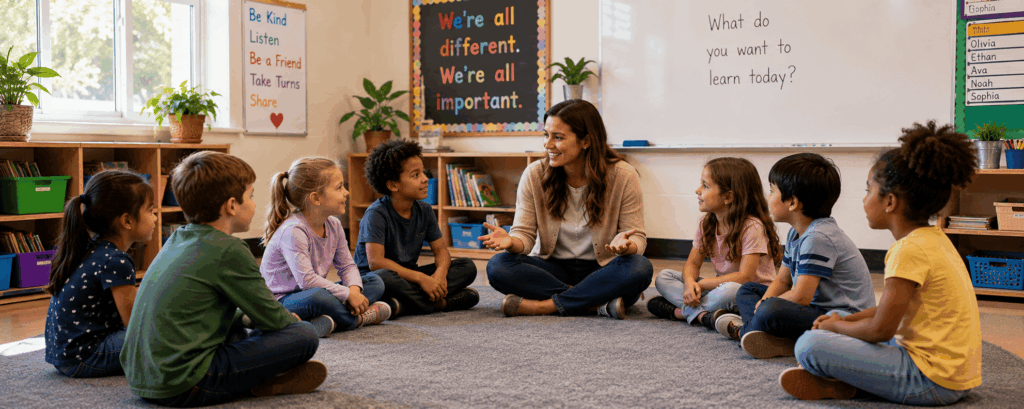
Democracy is not learned only through textbooks. It is learned through experience.
When students are encouraged to express their views, participate in discussions, collaborate with others, and take responsibility for their learning, they develop essential competences for democratic participation.
Democratic education promotes:
- critical thinking,
- respect for diversity,
- active participation,
- responsible decision-making,
- dialogue-based conflict resolution.
The Role of Human Rights Education
Human rights provide a common framework of values that protects the dignity of every individual.
Human Rights Education helps learners understand:
- their rights and freedoms,
- the responsibilities that accompany those rights,
- the importance of equality and justice,
- ways to challenge discrimination and exclusion.
At a time when misinformation, polarization, and hate speech are increasingly visible, Human Rights Education plays a crucial role in strengthening democratic societies.
Preparing Citizens for the Future
Today’s students will face challenges that extend far beyond national borders, including social inequalities, migration, environmental sustainability, artificial intelligence, and digital ethics.
Addressing these challenges requires more than technical knowledge. It requires values, attitudes, and competences that enable individuals to collaborate, think critically, and act responsibly.
Education for democracy and human rights contributes directly to the development of these capacities.
Beyond the Classroom
Democracy and human rights are not limited to politics or legislation. They influence everyday interactions, community life, and social relationships.
Education has the power to cultivate citizens who not only understand their rights but are also willing and able to contribute to more inclusive, just, and democratic societies.
In a rapidly changing world, democracy and human rights are not optional additions to education. They are essential foundations for the future.
Contact us

Doing a Master’s Degree in Greece: A guide to scholarships

Building a Community at an Online Master’s Studies: Is It Really Possible?
What You Actually Learn in an MA in Education (Real Skills Explained)

Studying for a Master’s While Working Full-Time: What to Expect

What Makes a Strong Application for a Master’s Program?